01The system behind the project
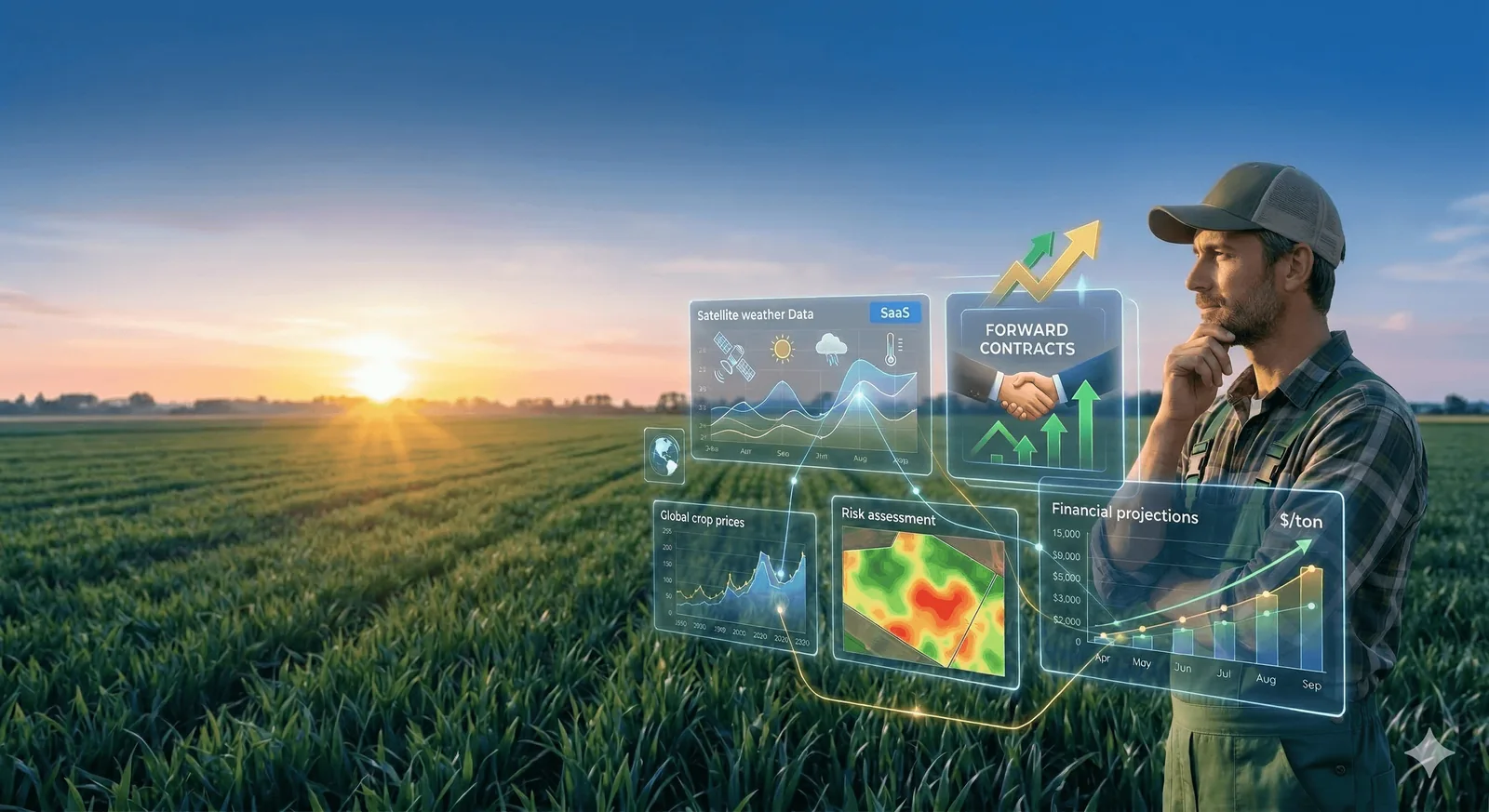
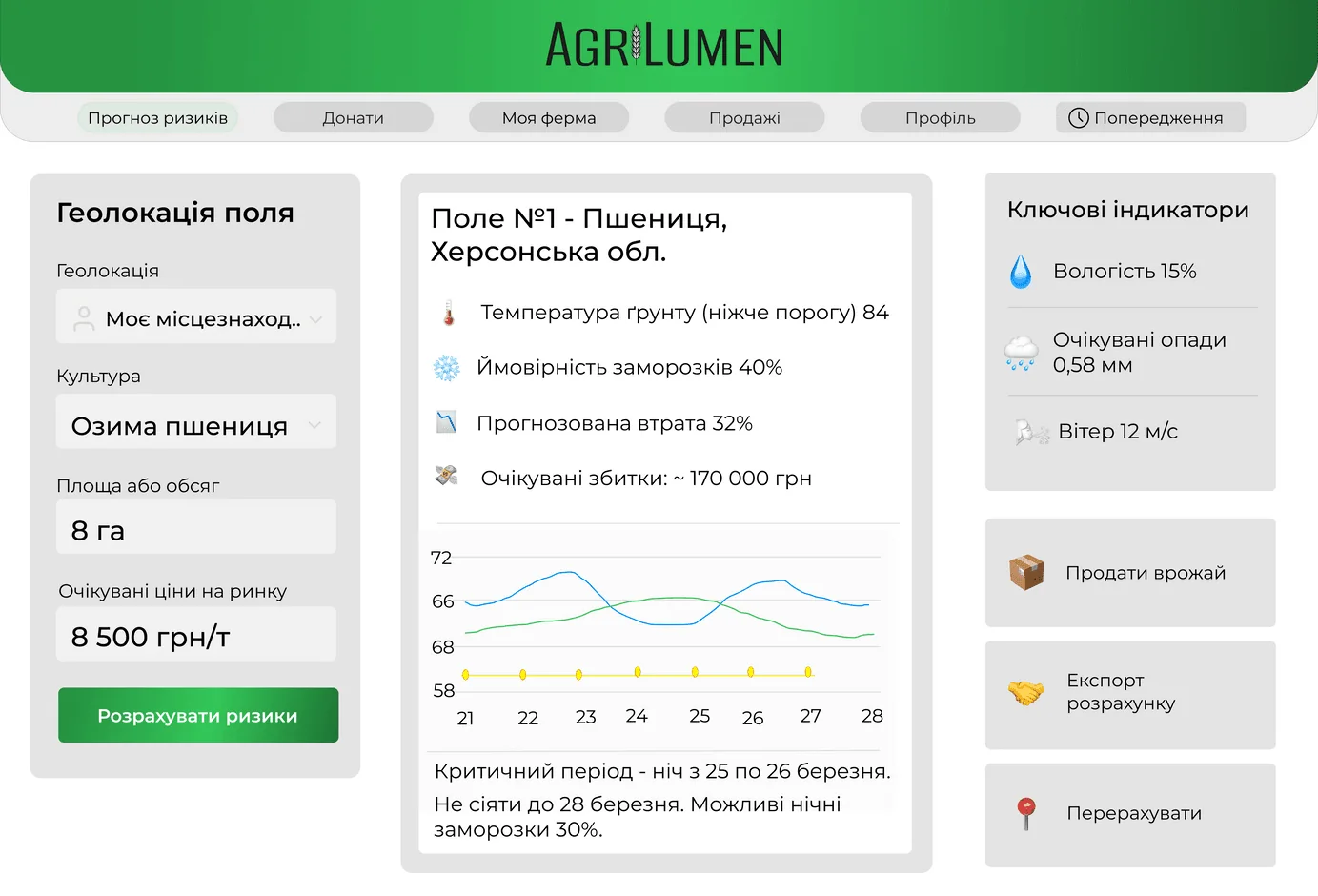
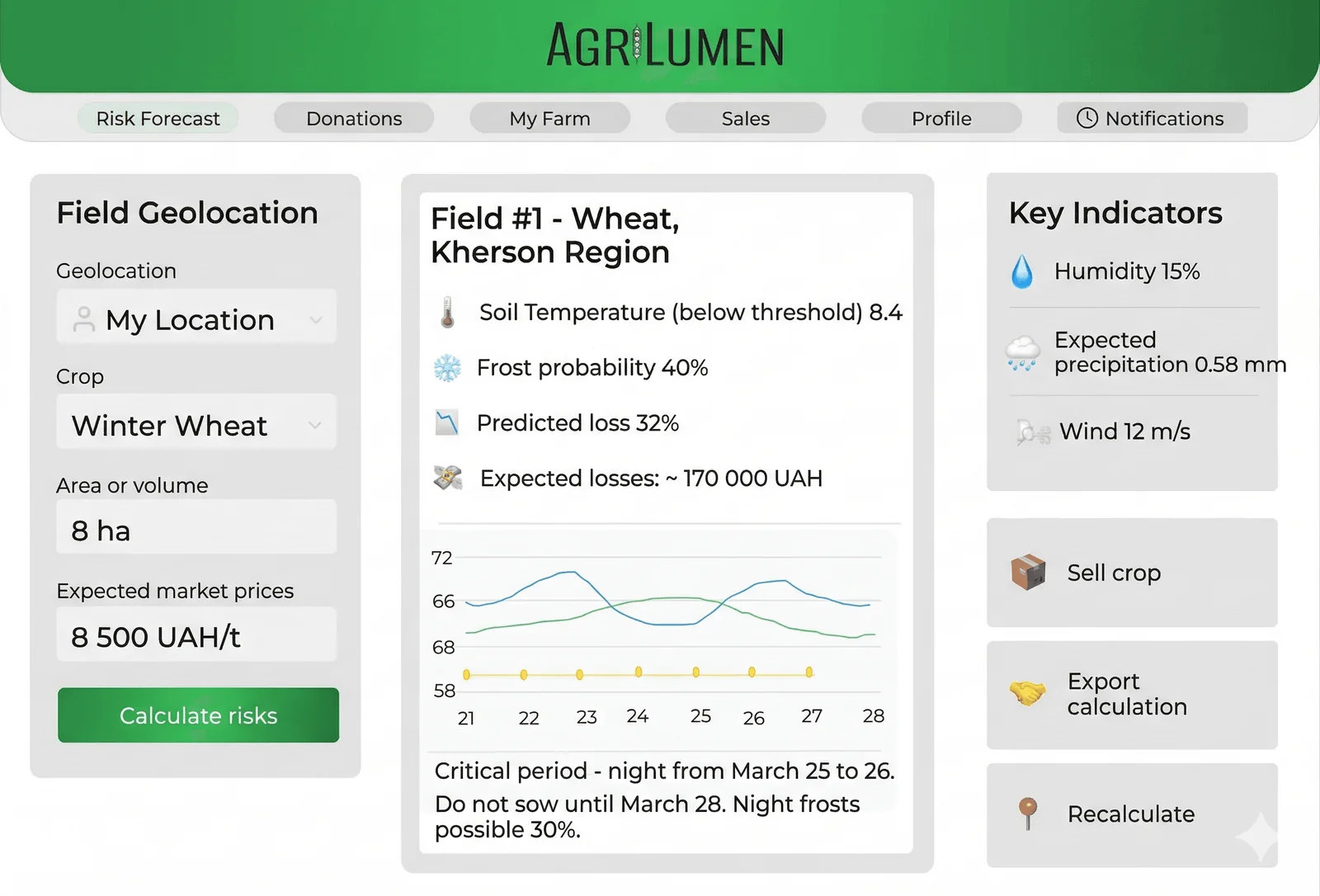
AgriLumen is an MVP-stage software concept intended to translate weather, satellite and market information into financial risk scenarios for farms. It addresses decisions where climate, yield and price uncertainty interact, especially for small and medium producers with limited analytical capacity. The source presents a three-stage programme and a target of 1,000 first users, not demonstrated adoption or proven model performance. Functionally, the service could connect the urban market of Kryvyi Rih with farming communities across the wider district without implying shared agglomeration governance.
02How the intervention works
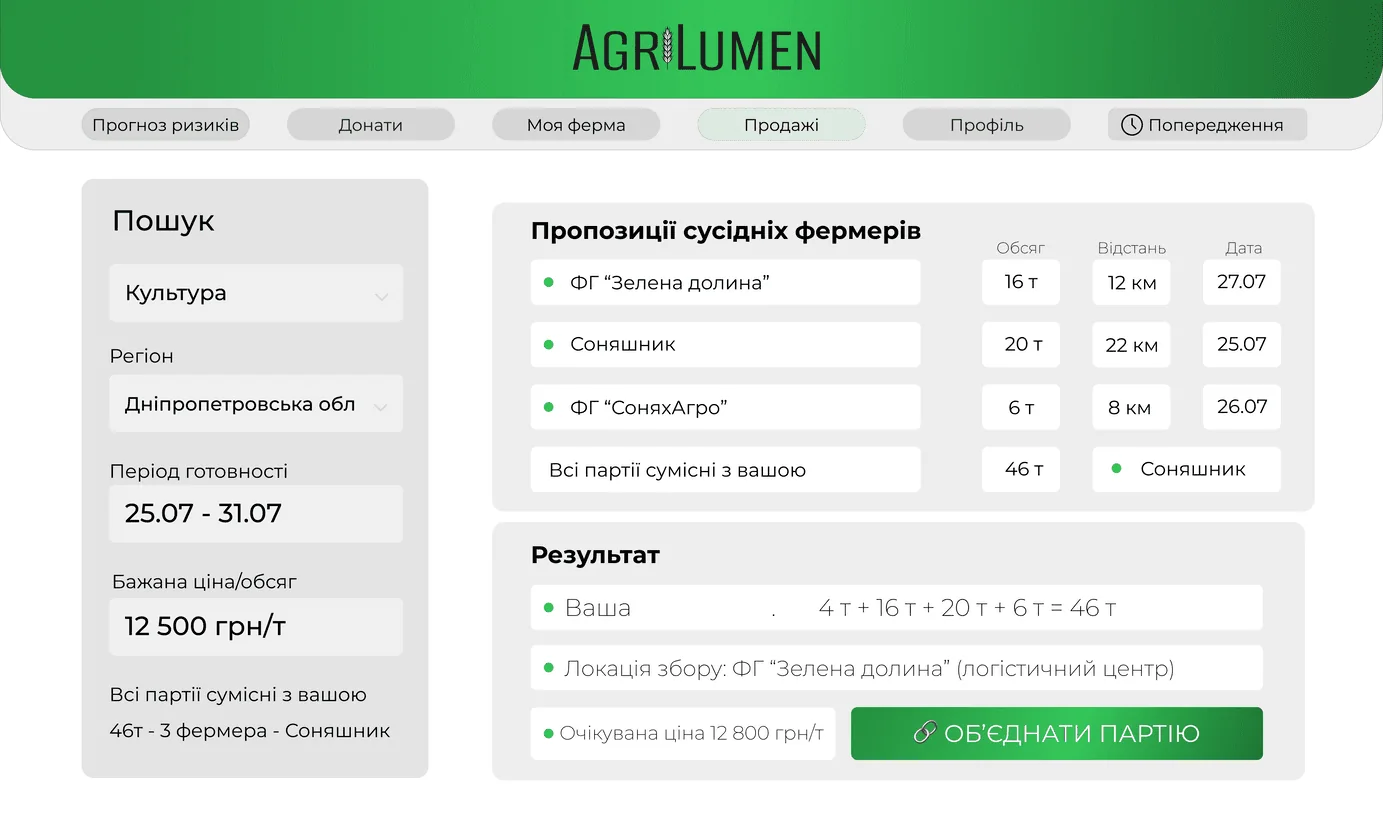
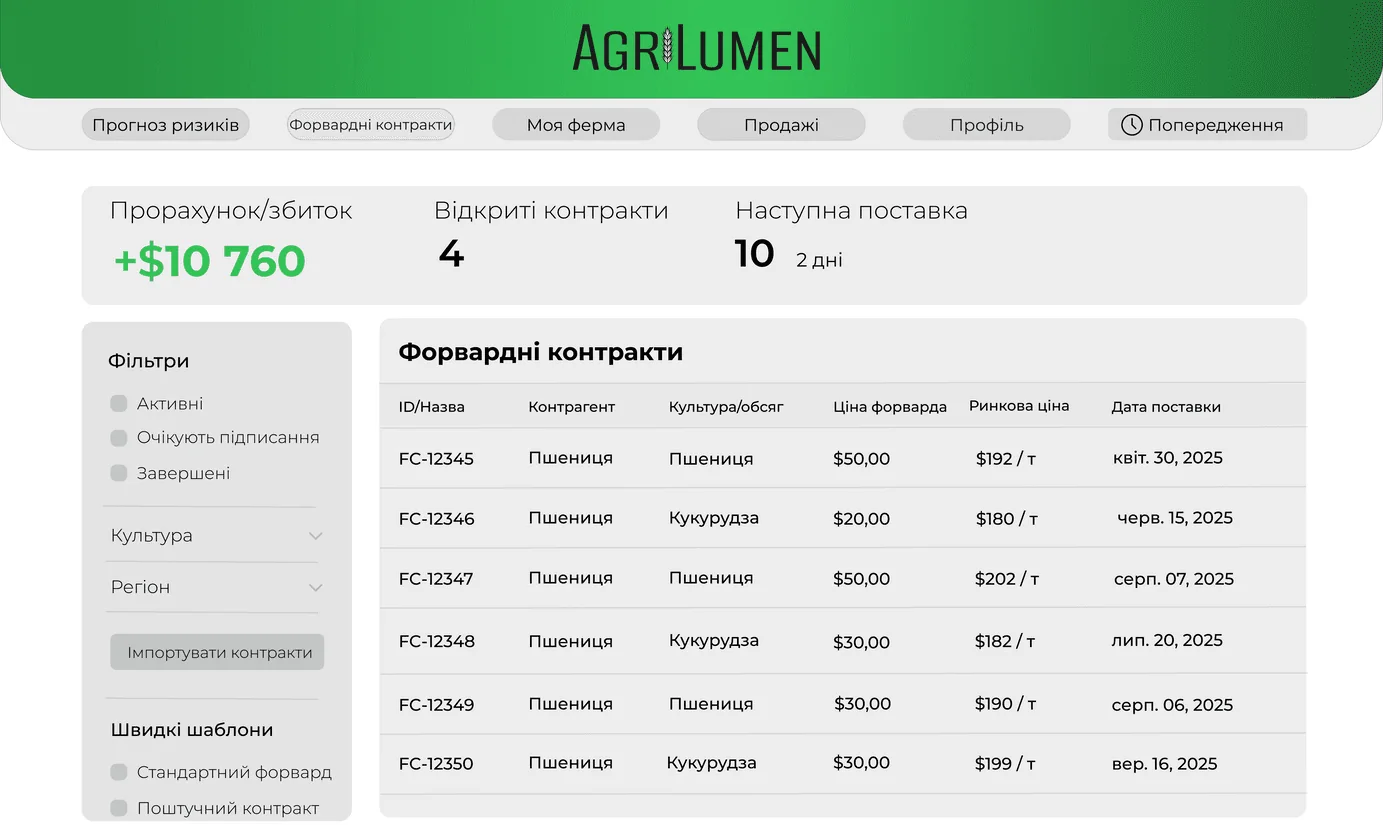
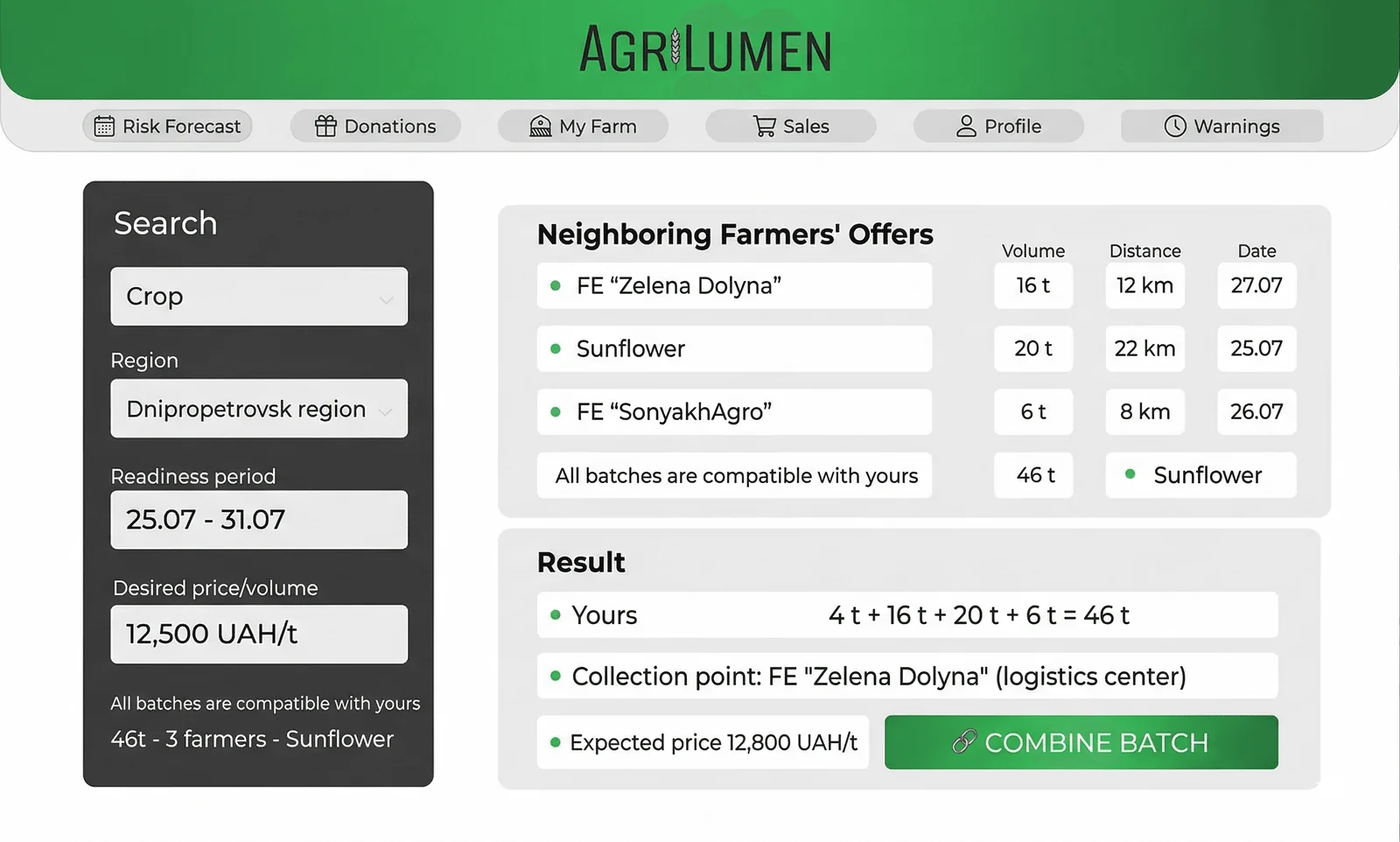
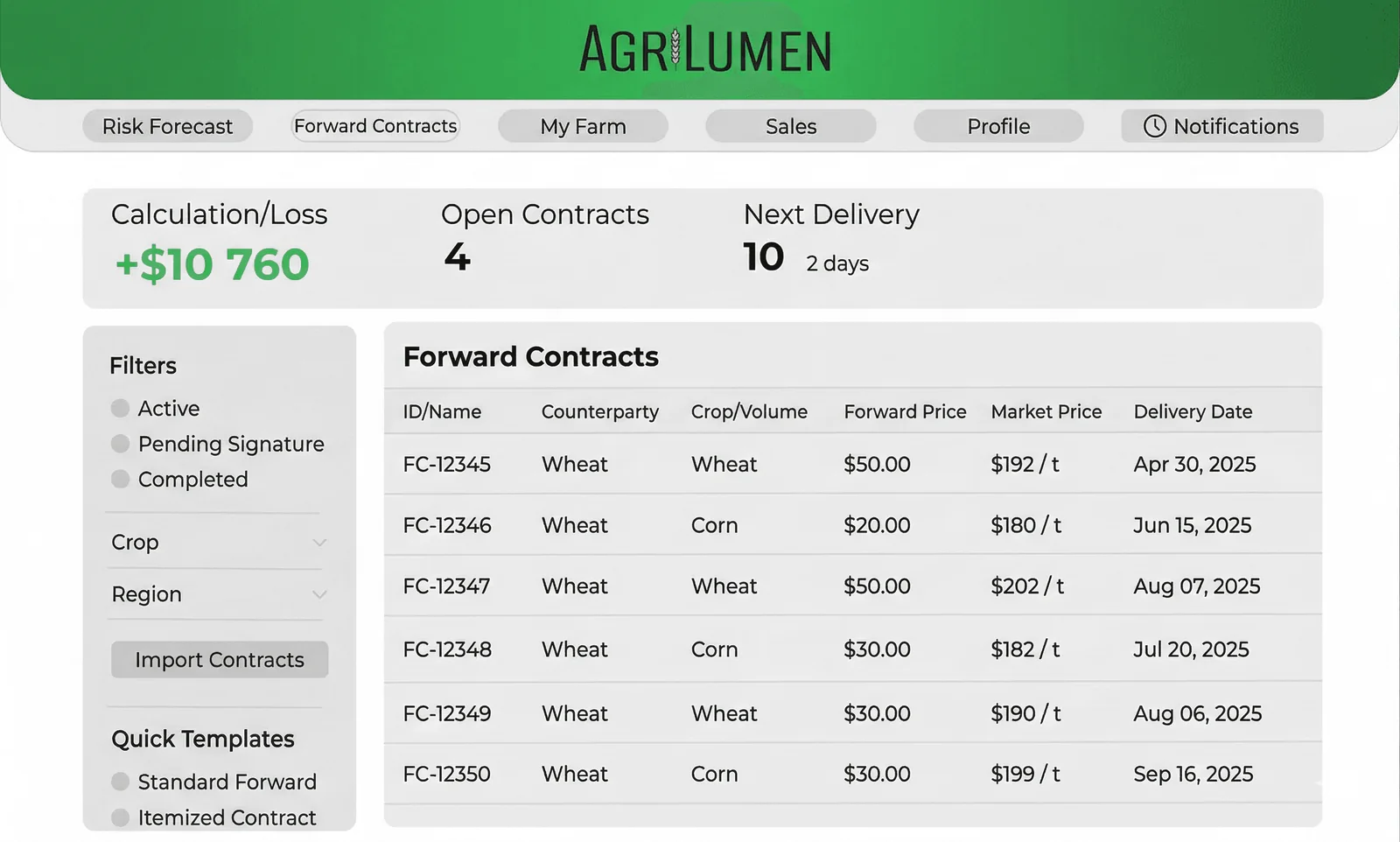
A credible platform needs governed data ingestion for meteorological, earth-observation and market sources; farm, field and crop profiles; reproducible risk models; and scenario outputs that explain assumptions rather than hide them. The application layer should provide dashboards, alerts, comparisons and exportable evidence, with role-based access and clear separation between observation, forecast and recommendation. Model versioning, back-testing, confidence ranges, audit logs, consent, privacy and cybersecurity are core components. The product should support human farm decisions and must not present uncertain analytics as guaranteed yields, prices or credit outcomes.
03From concept to an operable asset
The first stage should narrow priority crops, decisions and user journeys, secure lawful data access and establish measurable baselines. Back-testing against historical seasons must be followed by field pilots with representative farms, including low-connectivity and mobile use. Results should determine model changes, interface design and whether alerts arrive early enough to influence action. Only validated modules should move into broader onboarding, support and commercial testing. The stated first-stage and full-programme budgets describe the source proposal; they do not evidence financing, contracts, customer conversion or completion of any stage.
04What must be proven before commitment
Commercial and technical due diligence must verify licences and continuity for every data source, geographic and crop coverage, ground-truth methods, prediction error by use case, treatment of missing data and model drift. Reviewers need evidence from independent farm pilots, not only internal demonstrations. Privacy, information security, explainability, liability for decisions and any use by lenders or insurers require explicit controls. Customer willingness to pay, acquisition and support costs, retention assumptions, unit economics, intellectual-property ownership and dependence on third-party APIs must be tested before scaling the three-stage programme.
05Where a partner can create value
The project needs agronomists who understand local crops and farm decisions, remote-sensing and meteorological specialists, quantitative risk modellers, and engineers experienced in geospatial data pipelines and dependable SaaS operations. Pilot partners should include farms and producer groups able to share consented field records and evaluate decisions over real seasons. Data providers must offer clear licensing and service continuity. Useful validation partners include agricultural economists, cybersecurity and privacy experts, and potentially finance or insurance specialists who can test risk language without implying approved products. Product teams must provide multilingual, low-bandwidth support and transparent model documentation.