01The system behind the project
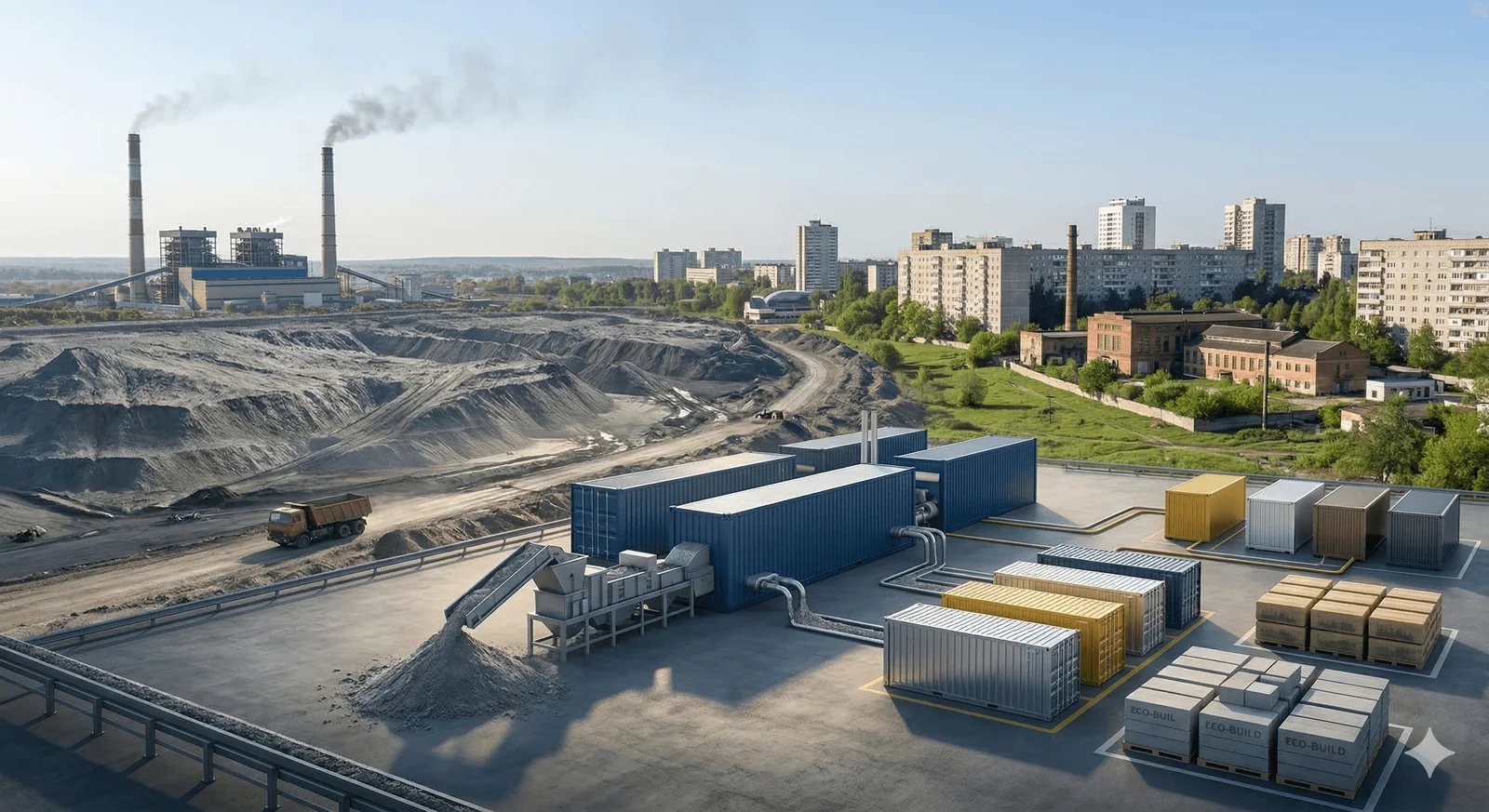
AshCore is at laboratory-prototype development stage and proposes a modular route for recovering metal and mineral fractions from coal ash. The problem is twofold: ash storage occupies land and may affect soil or water, while potentially useful material remains unqualified. The project must therefore prove environmental improvement and saleable outputs together, not treat residue removal as sufficient evidence. Kryvyi Rih offers relevant materials, engineering and industrial competence, but the source does not yet document a local coal-ash supply chain across the functional agglomeration.
02How the intervention works
The process architecture should begin with representative sampling and feedstock classification, followed by controlled preparation, separation and recovery stages matched to ash variability. Each module needs a mass balance covering target fractions, process water, reagents, emissions and final residues. Recovered materials require defined specifications, traceability and routes to customer qualification; non-recovered material needs a demonstrably safe destination. Dust collection, enclosed handling, water recirculation, occupational exposure controls and continuous sampling points should be designed into the plant. Modularity should enable isolation and comparison of process steps rather than conceal uncertain yields.
03From concept to an operable asset
Delivery should move through evidence gates: laboratory repeatability, bench-scale mass and energy balances, pilot campaigns using varied ash sources, independent environmental testing, customer samples and then an engineered demonstration module. Each gate should set minimum yield, purity, consumption, safety and residue criteria before further capital is released. Feedstock logistics and storage must be tested alongside processing, because moisture and composition can change performance. The source forecasts processing costs, product revenue and payback ranges; these are hypotheses to validate, not current commercial results, secured sales or completed facilities.
04What must be proven before commitment
Technical, environmental and commercial due diligence must verify ash ownership, historical and future volumes, representative chemistry, hazardous classification, contamination variability and reliable access to samples. Reviewers should reproduce mass balances, yields and product purity, then test energy, water, reagent, labour, residue and logistics costs. Environmental assessment, permitting route, worker exposure, dust, wastewater and long-term liability require independent review. Product standards, customer qualification, offtake terms, intellectual-property rights, scale-up risks and the assumptions behind the forecast processing-cost, revenue and payback ranges must be evidenced before investment.
05Where a partner can create value
The core consortium needs mineral-processing and extractive-metallurgy specialists, ash chemists, modular plant engineers and operators experienced with variable industrial residues. Accredited laboratories must measure feedstock, products, leachability, emissions and occupational exposure using defensible methods. Industrial partners should provide traceable ash lots and safe handling logistics, while prospective buyers must define specifications and run qualification trials for recovered mineral or metal fractions. Environmental engineers, water-treatment specialists, industrial hygienists, permitting advisers and independent pilot auditors are essential. A financing partner should understand staged technology risk and release capital against verified technical and market milestones.