01The system behind the project
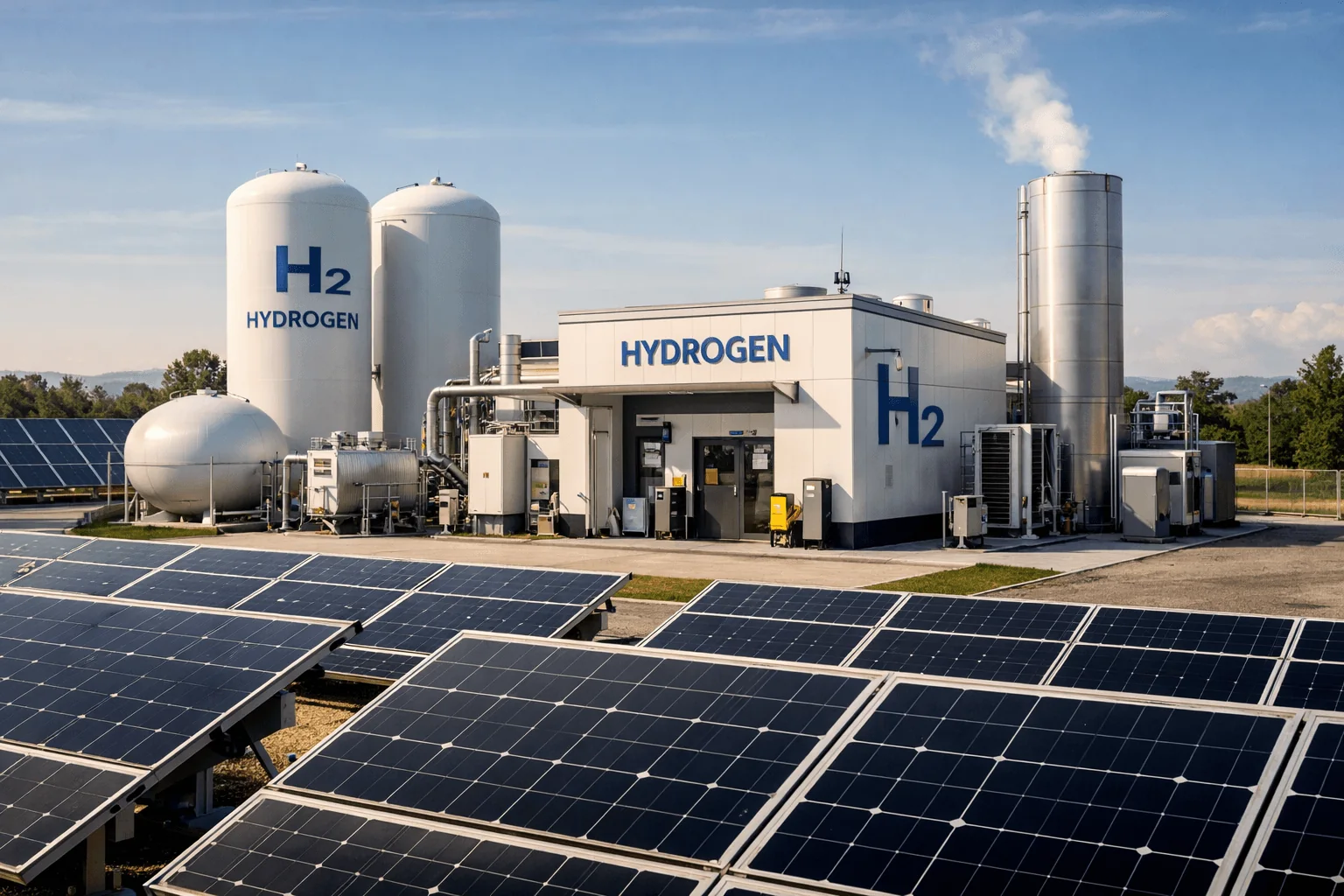
A 2 MW PEM electrolyser paired with 4 MW of solar capacity is designed to produce up to 245 tonnes of hydrogen per year. Kryvyi Rih has industrial demand but no proven local hydrogen chain. It could connect industry, utilities, universities and technical talent across the agglomeration; no regional hydrogen network is yet evidenced. The demonstrator is an industrial-chain test, not evidence of a regional hydrogen market. Its functional agglomeration role depends on a bankable offtaker, renewable electricity traceability, lawful water supply and safe interfaces among the utility site, industry, grid and research capacity.
02How the intervention works
The project combines solar generation, water polishing, electrolysis and safe storage at the aeration-station site, creating a demonstrator whose climate value depends on verified renewable electricity and real offtake. The process train must connect 4 MW solar generation and grid interface, power conversion, water polishing, 2 MW PEM stacks, drying and purity control, compression, storage and controlled delivery. Metering must prove electricity provenance and mass balance. Hazard zoning, ventilation, leak and flame detection, pressure relief, fire separation, emergency shutdown and remote supervision belong to the base design.
03From concept to an operable asset
Secure a qualified offtake specification and operating profile before freezing plant size. Confirm water quality and balance, solar and grid studies, then complete HAZID, HAZOP, hazardous-area classification and permitting. Factory tests precede integrated cold and hot commissioning. Ramp-up must verify purity, specific electricity, water use, availability, losses and storage cycles before any annual-output or climate claim is accepted. The source describes a feasibility-stage demonstrator and does not evidence contracted offtake, permits, financing, construction or production.
04What must be proven before commitment
Due diligence for the hydrogen demonstrator must verify binding offtake quantity, purity, pressure, price and delivery responsibility; renewable-power provenance and additionality method; water rights and treatment reject; grid constraints; electrolyser degradation; storage inventory; ATEX and fire case; permits, insurance, staffing and emergency response. It must stress-test capital, electricity price, curtailment, utilisation, replacement, logistics and all revenue, emissions and NPV forecasts. No hydrogen volume, carbon benefit or revenue should be treated as achieved until calibrated meters, verified power attributes and accepted customer deliveries support it.
05Where a partner can create value
Required capabilities include PEM electrolyser and solar EPC integration, industrial water polishing, power electronics and grid protection, hydrogen compression and storage, process control, ATEX electrical design, functional safety, HAZOP leadership, fire response, gas-quality laboratories, lifecycle assessment, qualified industrial offtake and project finance. The operator needs certified procedures, spares, competency records and drills; independent engineers must witness performance and safety acceptance. The system integrator must own guarantees across electrolyser, power conversion, water polishing, compression and controls while specialist safety review remains independent.