01The system behind the project
The proposal links two difficult systems: management of residual waste that remains after prevention and sorting, and diversification of district-heat production. It envisages a 20 MW thermal boiler supplied with specified RDF, with source targets of 50,000 tonnes of fuel and up to 120,000 Gcal of annual heat. RDF is not automatically renewable or circular; poor feedstock and weak emission control can transfer pollution from landfill to air or ash. Agglomeration relevance depends on lawful intermunicipal feedstock governance and a firm heat sink, neither yet established.
02How the intervention works
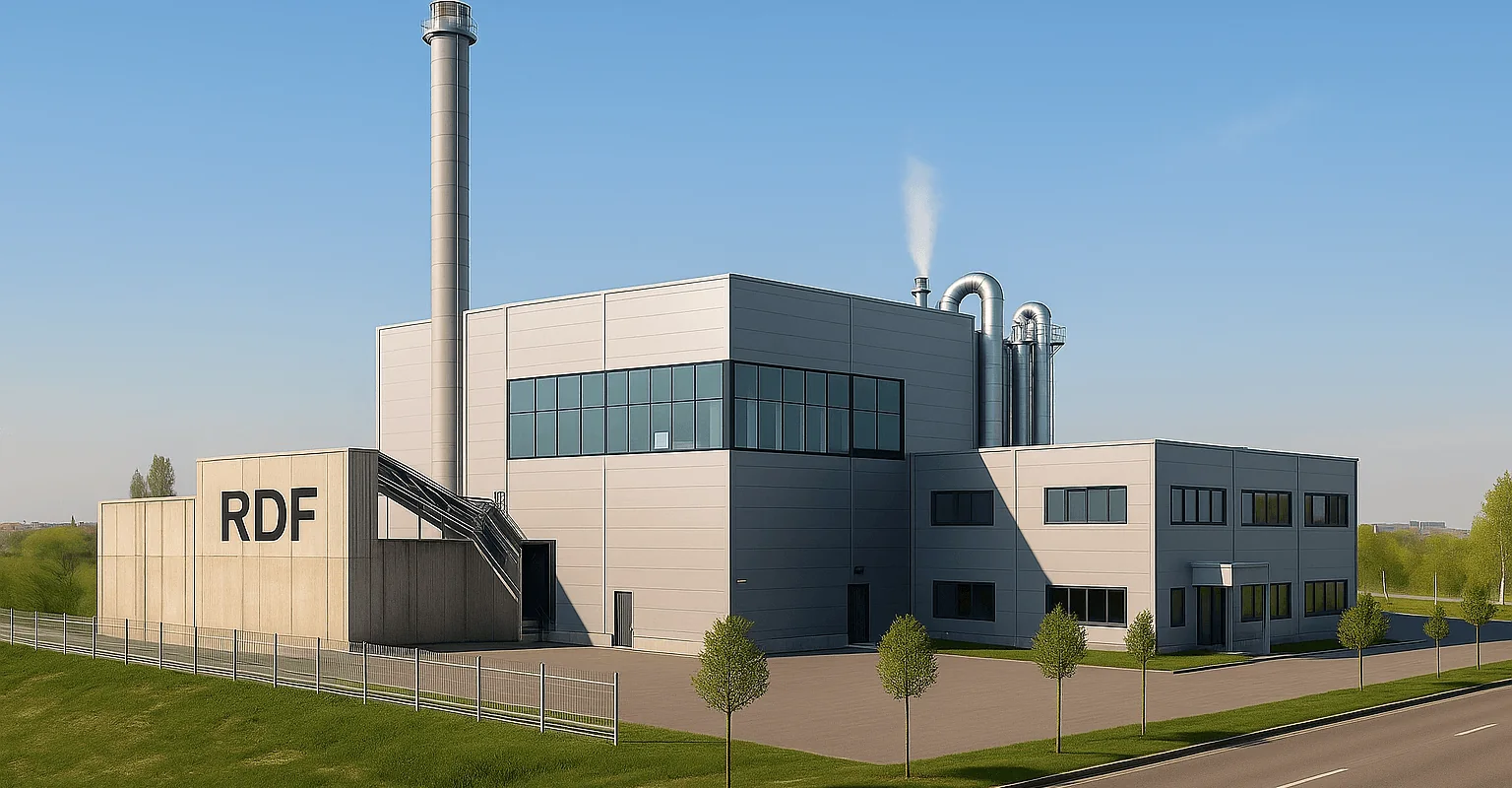
A credible plant requires enclosed fuel reception and storage, sampling and acceptance laboratory, controlled feeding, boiler and heat-recovery train, best-available flue-gas cleaning, continuous emissions monitoring, ash segregation, fire protection and connection to the heat network. Fuel specification must cap moisture, chlorine, metals and particle size, with rejection procedures for nonconforming loads. The design must distinguish bottom ash, fly ash and treatment residues and assign lawful outlets. Waste hierarchy controls should prevent recyclable material from being burned merely to fill capacity, while heat dispatch follows verified network demand.
03From concept to an operable asset
Development starts with a waste-composition and availability study that deducts prevention, separate collection and recycling before calculating residual RDF. In parallel, confirm year-round heat offtake, network interface and alternative operating scenarios. Environmental impact assessment and meaningful public consultation must precede final technology selection. Procurement should bind fuel quality, emissions guarantees, residue handling and performance testing in enforceable terms. Construction then proceeds through civil works, boiler and cleaning systems, followed by cold and hot commissioning. Commercial operation begins only after accredited emissions, heat-output and residue tests meet permits.
04What must be proven before commitment
Before investment, confirm lawful annual RDF supply, contracts or governance across participating territories, fuel quality distribution, transport impacts, storage and fire case. Verify the heat buyer, seasonal dispatch, connection cost, backup role and revenue rules. The source forecasts 13.5 percent return and eight-year payback; disclose gate fees, heat tariff, fuel preparation, reagents, electricity, staffing, maintenance, residue disposal, emissions compliance, financing and downtime assumptions. Decision-makers also need BAT comparison, full emissions model, health baseline, ash classification, carbon accounting, permitting route, public-consultation record and downside cases for lower fuel or heat demand.
05Where a partner can create value
The project needs an experienced waste-to-heat technology provider with references under comparable RDF quality and emission limits, not only a boiler vendor. Independent environmental engineers should lead BAT assessment, dispersion modelling, health-risk review and monitoring design. Feedstock partners must operate lawful sorting and quality assurance; the heat utility must define dispatch and interface obligations. Accredited emissions laboratories, fire engineers, residue-treatment specialists and public-engagement professionals are essential. Financiers should require transparent waste hierarchy, continuous data disclosure and enforceable performance guarantees, and reject supply structures that depend on recyclable material or undocumented cross-border waste flows.