01The system behind the project
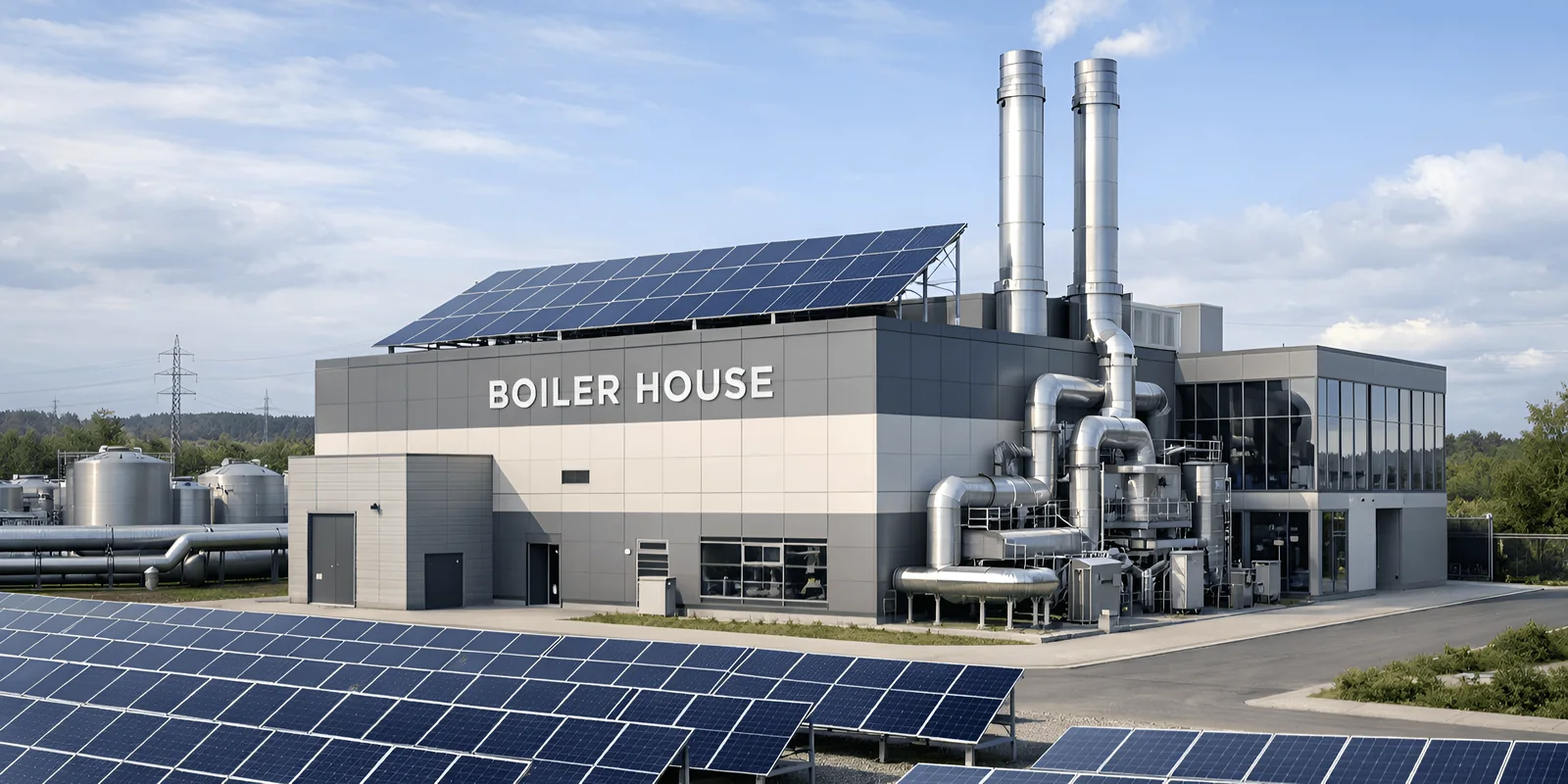
The portfolio proposes photovoltaic generation and batteries across 62 boiler-house sites of Kryvorizhteplomerezha. Heat production depends on pumps, burners, controls and communications exposed to high electricity costs and grid interruption. The source targets more than 11.9 GWh of annual solar production, savings and carbon reduction, but resilience cannot be expressed as unlimited autonomy. Each site has a different roof, load and critical operating sequence. The project directly supports the city heat utility while offering a replicable portfolio method for smaller systems in the functional agglomeration.
02How the intervention works
Every site needs its own interval load, roof or ground structure, connection, fire and critical-load design within a standard portfolio architecture. Core components are PV modules, inverters, batteries, battery management, protected switchboards, bidirectional meters, local controllers and central monitoring. Storage power and energy must be sized separately: MW determines which equipment can start, MWh determines how long it can run. The control hierarchy should optimise self-consumption during normal operation and preserve defined safe heat functions during outages, with islanding only where technically designed, permitted and tested.
03From concept to an operable asset
Start with structural, electrical and load audits for all sites, then group them into repeatable archetypes and exclude unsuitable roofs. A pilot wave should represent different boiler-house sizes and operating regimes. Detailed design, permits and procurement can use common specifications, but each site retains its protection settings and acceptance profile. Commission PV, battery, controls and critical-load operation separately before portfolio aggregation. A heating-season measurement campaign should compare generation, self-consumption, peak reduction and verified support hours. Lessons from the pilot wave control release and configuration of later groups.
04What must be proven before commitment
Before financing, confirm the 62-site inventory, structural capacity, land or roof rights, interval consumption, critical loads, connection limits, battery power and energy, and lawful islanding conditions. Reconcile the source forecasts for 11.9 GWh, annual savings, CO2 reduction and six-year payback using yield, self-consumption, curtailment, tariffs, degradation, battery replacement, OPEX and financing. Decision-makers need site-level CAPEX, fire strategy, grid-code studies, cybersecurity, warranties, recycling and decommissioning. Resilience claims must specify supported equipment, tested hours and operating conditions rather than treating total battery capacity as guaranteed heat continuity.
05Where a partner can create value
The project needs a distributed-energy integrator experienced with heat utilities, multiple live sites, battery safety and central portfolio control. Solar and storage suppliers must provide bankable warranties, local service, replacement strategy, open protocols and cybersecurity support. Structural engineers, fire specialists, distribution-system operators and independent commissioning teams are essential for every site. A financier should accommodate staggered drawdown and evidence-based release by wave. The utility’s operators must co-design critical-load scenarios and receive training, while an independent verifier measures savings and carbon results without conflating grid cost reduction with full operational autonomy.