01The system behind the project
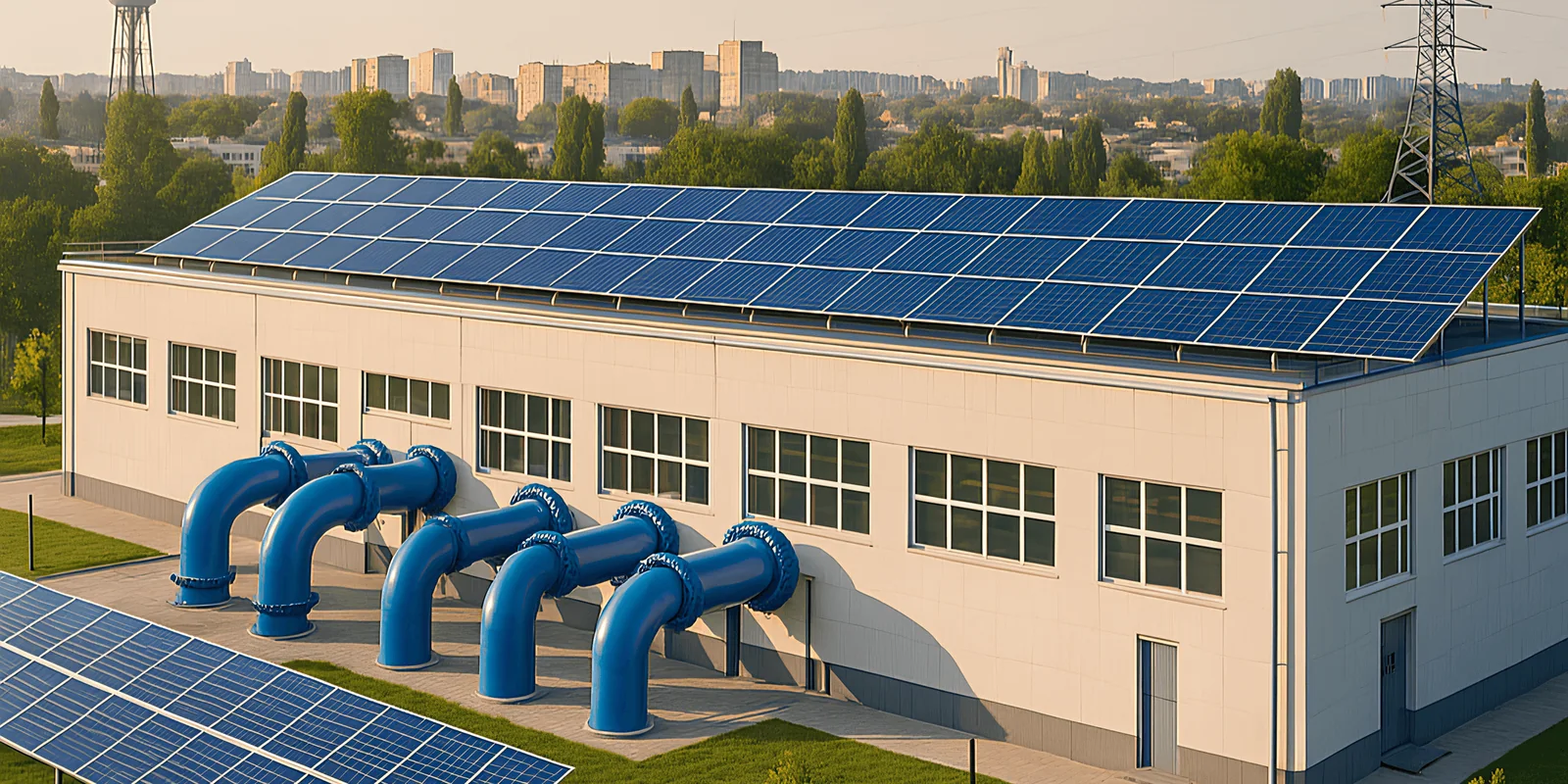
Water and wastewater pumping is electricity-intensive and cannot simply stop during grid disruption. The project proposes distributed solar and high-capacity batteries at Kryvbasvodokanal pumping sites, with a source target to reduce grid use by 4,775,930 kWh annually and support priority loads serving 434,563 consumers. The public benefit is continuity of a critical urban service on which the wider agglomeration depends economically. Direct coverage must remain factual: the source identifies the utility and consumer count, not universal supply or unlimited autonomy for every facility.
02How the intervention works
Site-level design combines PV arrays, high-capacity batteries, inverters, medium- or low-voltage switchgear, protection, meters, dispatch controls and central SCADA with the hydraulic process. Critical pumps, valves, telemetry and water-quality functions need ranked load groups. Battery MW must meet starting and running power; MWh must cover a stated operating duration under defined pumping schedules. Controls should reduce peaks and purchases in normal conditions, then preserve selected service during outages. Islanding, black start and resynchronisation require engineered protection, utility approval and witnessed testing rather than generic equipment claims.
03From concept to an operable asset
Begin with interval electrical and hydraulic data at each candidate station, identify minimum safe water and wastewater duties, and model normal, outage and recovery scenarios. Select a representative pilot site before standardising equipment families across the portfolio. Complete network studies, protection coordination, fire design and procurement; install without compromising pumping continuity. Commission solar, storage, dispatch and hydraulic response together, including loss of grid and restoration. Verified support hours, water moved, energy saved and battery degradation should govern later waves. Operators need simulator-based procedures and maintenance routines before automated resilience modes are enabled.
04What must be proven before commitment
Before financing, confirm the site list, critical and flexible loads, motor starting currents, hydraulic storage, outage history, grid limits, battery MW and MWh, and legal islanding rules. Reproduce the source’s annual savings, five-year payback and 20-year net present value from yield, tariffs, self-consumption, peak charges, degradation, replacements, OPEX, taxes and financing. Review fire safety, hazardous locations, cybersecurity, flood exposure, equipment warranties, recycling and disposal. Any continuity claim must state which pumps operate, for how many hours, at what flow and under which source and reservoir conditions.
05Where a partner can create value
The lead partner should integrate renewable generation, utility-scale batteries, motor drives, hydraulic operations and distribution protection on live water assets. Battery and inverter suppliers need proven safety certification, open control interfaces, local service and long-term replacement commitments. Hydraulic engineers, grid operators, fire specialists, cybersecurity experts and independent commissioning teams must collaborate on each operating scenario. A financier should support staged sites and account for battery lifecycle cost. Utility operators remain central: partners must transfer dispatch logic, emergency procedures and diagnostics rather than leaving a black-box system that cannot be safely maintained locally.