01The system behind the project
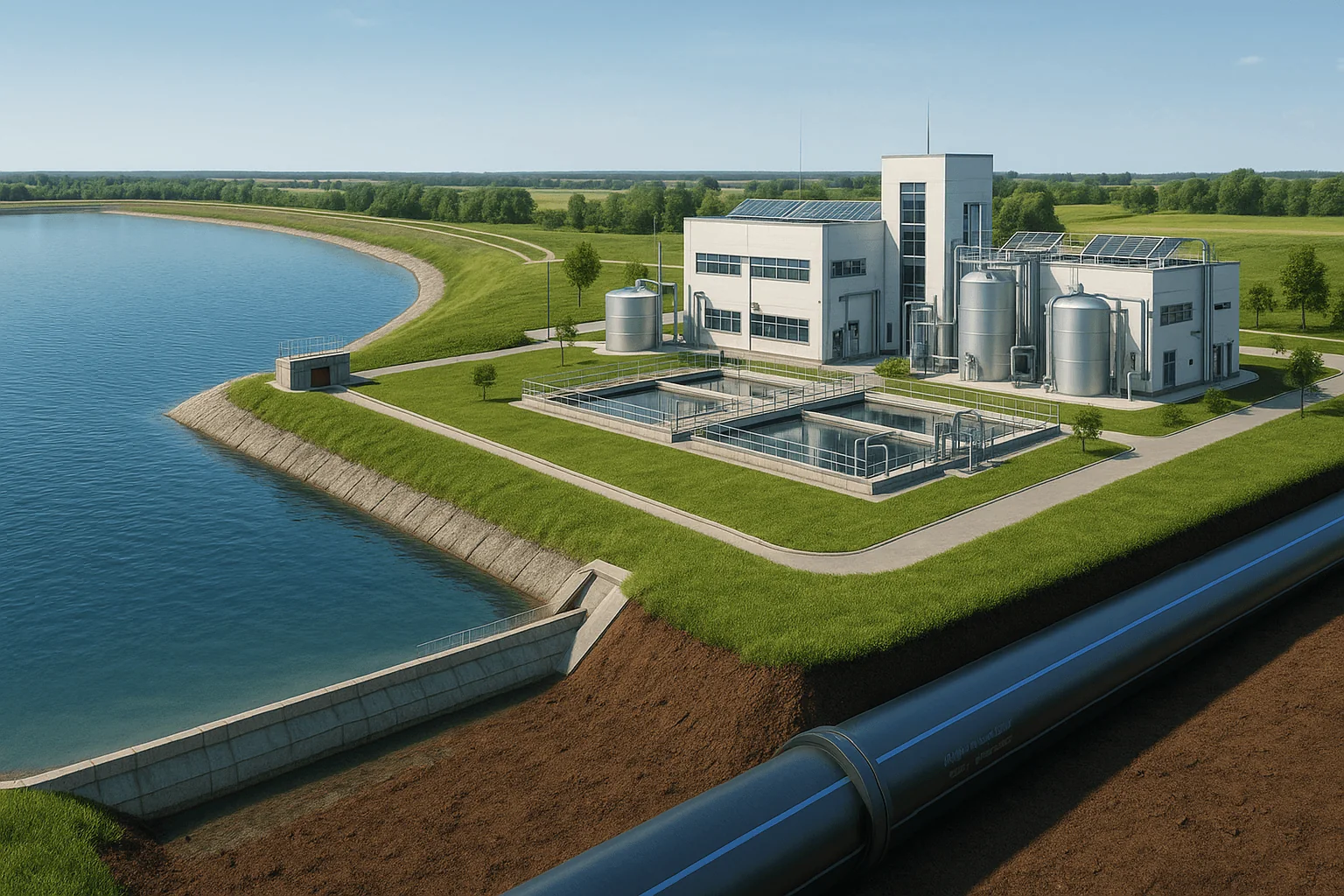
Northern Kryvyi Rih relies on a limited and heavily stressed water-supply chain. The proposed complex adds a separate source-to-consumer route through intake, pumping, treatment and about 23 kilometres of trunk main. Its stated design capacity is 83,000 cubic metres per day, with roughly 150,000 beneficiaries presented as a forecast. Functionally, the asset supports the agglomeration's main residential, public-service and employment centre; the source does not establish direct supply to other municipalities or any new agglomeration authority.
02How the intervention works
The technical system should be treated as one hydraulic and water-quality chain: source abstraction, raw-water pumping, treatment, treated-water pumping, trunk transmission and controlled connection to the receiving network. Design must align peak and average demand, source variability, treatment barriers, pressure zones, energy use and emergency operating modes. Online monitoring, laboratory verification, telemetry, backup power and maintainable isolation points should be specified at system interfaces. The 23-kilometre route also requires coordinated easements, crossings, corrosion protection, surge analysis and leak-detection provisions.
03From concept to an operable asset
Delivery should begin with hydrological, geotechnical and route surveys, confirmation of design criteria and completion of environmental and permitting work. The intake, treatment plant, pumping stations, power connections and trunk main can then be packaged around clear interface responsibilities and a common commissioning plan. Construction sequencing must preserve existing supply and provide temporary arrangements where tie-ins create risk. Pressure testing, disinfection, water-quality validation, operator training and as-built records should precede operational handover. The investment feasibility study and programme inclusion do not by themselves evidence permits, financing or completed procurement.
04What must be proven before commitment
Investment due diligence must verify source yield and quality across seasons, abstraction rights, land and easements, route constraints, environmental and social impacts, connection conditions and the demand assumptions behind the stated capacity. Reviewers should test capital and operating estimates, power demand, chemical consumption, sludge management, climate resilience and contingency allowances. The forecast beneficiary count and annual volume need a transparent calculation. Procurement strategy, ownership of each interface, tariff and affordability effects, operator capacity, maintenance funding, schedule risk and responsibility for overruns must be documented before commitment.
05Where a partner can create value
Suitable partners include water-process engineers with comparable intake and treatment references, pipeline designers experienced in long pressure mains, and contractors able to coordinate civil, mechanical, electrical and control packages. Equipment suppliers should support lifecycle maintenance, spare parts and operator training, not only installation. Accredited laboratories, environmental and social specialists, geotechnical teams, land and permitting advisers, and independent commissioning engineers are required. Financing partners should understand municipal water infrastructure, transparent procurement and affordability safeguards, while technology partners must integrate telemetry, energy management and leak detection with the future operator's systems.